

Estimated reading time: 7 minutes
Disclaimer: This guide is a research-based informational article. We are not doctors, and this content is not intended as medical advice. For personal health concerns, symptoms, or treatment, always consult a qualified healthcare provider.
Did you know Lyme disease symptoms can start just 3 days after a tick bite, and early treatment is one of the best ways to prevent long-term problems? If you have been outdoors and feel “off,” recognizing Lyme disease symptoms early matters.
Are you confused because Lyme disease symptoms can look like the flu, and the bullseye rash does not always show up? You are not alone. Many people miss early signs, or they get a negative test too soon.
This guide is here to help. Here’s what you’ll learn:
Ready to understand Lyme disease symptoms and know what to do next? Alright, here we go.
Lyme disease symptoms can affect nearly every part of the body, from your skin and joints to your nervous system. Caused by a bacterium called Borrelia burgdorferi and spread through tick bites, this infection can go unnoticed at first — which makes early recognition and testing especially important.
The illness usually starts within three to thirty days after a tick bite. The sooner it’s diagnosed, the easier it is to treat and recover fully.
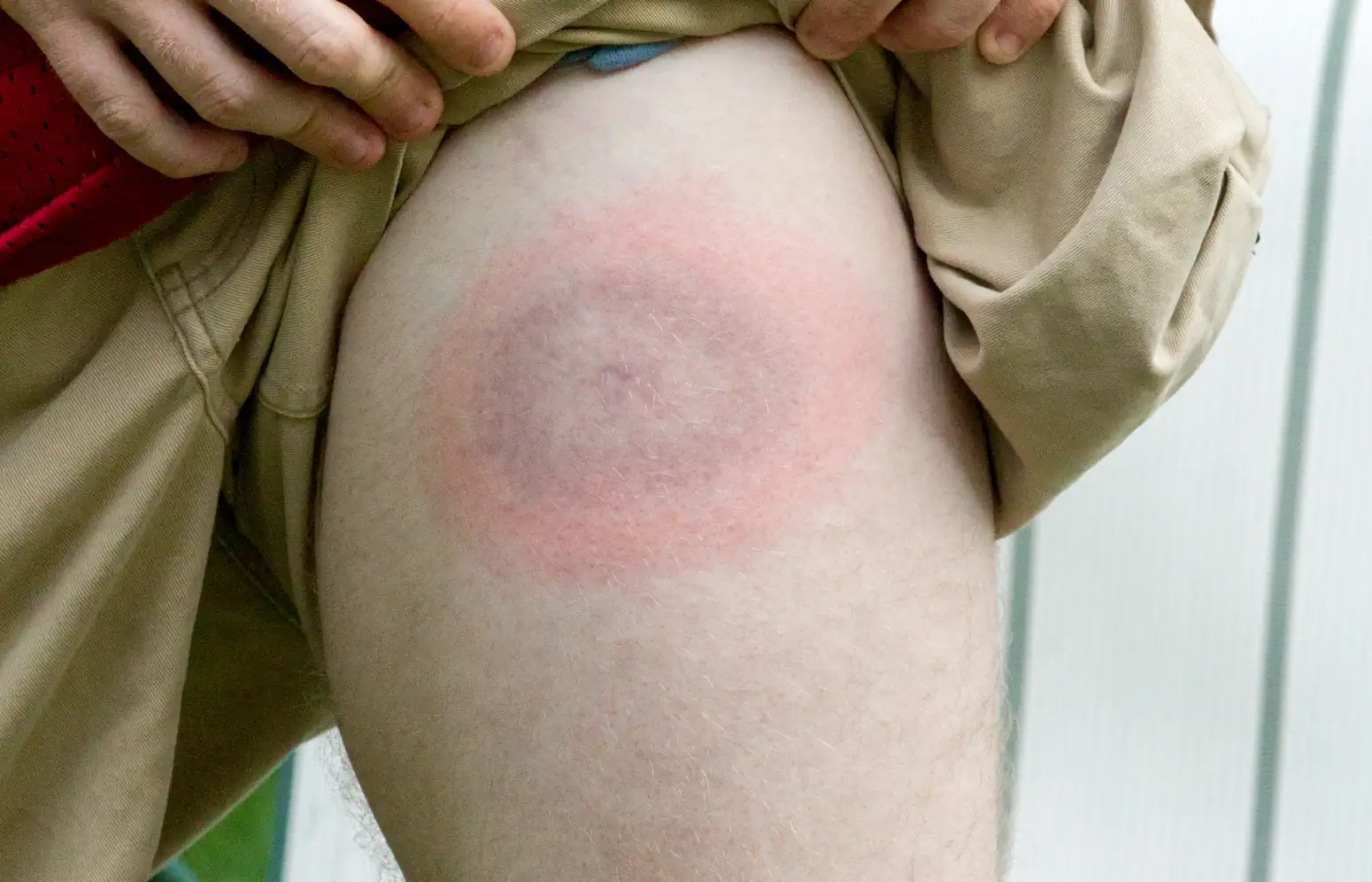
The first stage, called early localized infection, often begins with a distinctive rash known as erythema migrans. This rash looks like a red or pink expanding circle, sometimes resembling a bull’s-eye pattern. According to the Centers for Disease Control and Prevention (CDC), around 70 to 80 percent of people with Lyme disease develop this rash.
Along with the rash, people may notice:
Because these signs can mimic the flu, Lyme disease is sometimes mistaken for a simple viral infection. That’s why it’s essential to consider where you’ve been. If you’ve recently spent time outdoors in grassy or wooded areas, a Lyme disease test may be a good idea.
If Lyme disease isn’t treated early, it can spread through the bloodstream and affect multiple systems in the body. This stage is called disseminated infection, and it may begin weeks or even months after the tick bite.
Lyme disease can affect the nervous system, causing:
When the infection reaches the heart, it can cause Lyme carditis, a condition that interferes with the heart’s electrical signals and rhythm. Joint pain and swelling are also common and may move from one joint to another, a condition known as Lyme arthritis if left untreated.
Because these symptoms vary so much from person to person, accurate diagnosis depends on both clinical experience and reliable Lyme disease testing.
If Lyme disease goes untreated for months or years, long-term problems can develop. These may include ongoing arthritis, chronic fatigue, or neurological issues like encephalopathy (inflammation of the brain that can cause confusion or memory problems).
Some people experience lingering symptoms even after treatment. This is called post-treatment Lyme disease syndrome. Doctors are still studying why it happens, but the effects such as fatigue, pain, and brain fog can last for months. Early treatment remains the best way to prevent these lasting complications.
The standard Lyme disease test involves two steps:
However, these tests can miss infections in the early stages because antibodies take time to develop. This means a person can test negative even if they’re infected.
That’s why doctors rely on symptoms, medical history, and known tick exposure — not just test results — when making a diagnosis.
Missing or misdiagnosing Lyme disease can have lasting effects. Untreated infection can spread, making recovery harder and increasing the risk of complications. On the other hand, treating someone for Lyme disease when they don’t actually have it can lead to unnecessary antibiotic use.
A 2020 review published in Frontiers in Medicine found that delayed diagnosis often leads to long-term problems with the joints and nervous system. This reinforces how important accurate testing and early treatment are for the best outcomes.
The CDC recommends several simple habits to reduce your risk:
If you find a tick attached to your skin, remove it promptly with fine-tipped tweezers and clean the area. The sooner you remove it, the lower your risk of infection.
The good news: Lyme disease treatments are highly effective when started early. Most people recover fully after a short course of antibiotics.
For early Lyme disease without complications, doctors usually prescribe:
Treatment typically lasts 10 to 14 days, and most patients begin to feel better within a few weeks.
When Lyme disease affects the nervous system or heart, stronger antibiotics may be given through an IV (intravenous) line. Medications like ceftriaxone or penicillin G are commonly used for 14 to 21 days.
In all cases, experts agree that prolonged antibiotic therapy beyond 8 weeks provides no additional benefit and may cause harmful side effects such as antibiotic resistance or digestive problems.
Lyme disease isn’t just a medical issue — it’s a human experience. People often face months of fatigue, frustration, and uncertainty before getting answers. It can disrupt work, relationships, and emotional health.
Improving awareness, testing, and treatment means giving patients back their quality of life. The more we understand this disease, the better we can prevent it and help those who are struggling recover faster.
Ongoing research is leading to better Lyme disease tests that can detect infection earlier and more accurately. Scientists are developing advanced molecular tests, such as PCR testing, which identifies bacterial DNA directly. Vaccine research is also underway, with promising results in clinical trials.
The National Institutes of Health continues to fund studies focused on prevention, diagnosis, and new treatment options — aiming to reduce the overall impact of Lyme disease on public health.
Recognizing Lyme disease symptoms early and getting the right Lyme disease test can make all the difference. Awareness, prevention, and timely care remain the best defenses against long-term complications.
DNA ConneXions® offers advanced Lyme disease testing that can detect infections often missed by traditional methods. Contact DNA ConneXions today to learn more about a reliable Lyme disease test and take the next step toward protecting your health.
In Lyme Disease – The Ultimate Guide Part III we discuss treatments for Lyme Disease.